Four centuries after the Gothic Age, technological developments in printing and reproduction provided a ripe opportunity for illustration. These developments, coupled with the growth of the middle class, caused the book publishing industry to flourish. This period was known as the Golden Age of Illustration.
The European artists of this time were strongly influenced by the style of Japanese woodcut prints. Other influences such as the Pre-Raphaelites, Art Nouveau, the Arts, and Crafts Movement, and Les Nabis contributed to the strong design elements of many of the illustrations. Walter Crane, Edmund Dulac, Aubrey Beardsley, Arthur Rackham, and Kay Nielsen were some of the most prominent artists of this era.
The Brandywine tradition, founded by Howard Pyle, was the foremost influence on American illustration of this period. Notable American artists of the Golden Age were N.C. Wyeth, Maxfield Parrish, J.C. Leyendecker, Charles Dana Gibson, and Jessie Willcox Smith.
Among the most popular subjects of this period, on both sides of the Atlantic, were fairy tales, folklore, myths, and legends. These subjects were as popular with adults as they were with children and the vivid subject matter allowed illustrators to create fantastic images that melded magic with realism.
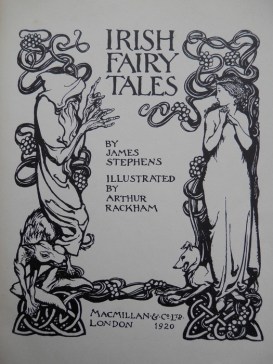
Arthur Rackham, 1920, watercolor and ink, cover page to James Stephens’ Irish Fairy Tales.
At the forefront of this fantasy genre of literature were the age-old tales from Irish lore and mythology. Rich with legendary accounts of fairies, goblins, witches, and mysterious little men with secret pots of gold, these tales were ideal for the endless imaginations of the days most prominent artists. These stories also provided an opportunity for incorporating the intricate knotwork of the Celtic tradition into the highly stylized compositions which were characteristic of this category in late 19th-century illustration.







 Scribes & Storytellers