The art of the ancient Celtic tradition has endured for over 5,000 years. It has evolved from simple primitive markings into the most complicated and sophisticated designs and imagery. Much like the Celtic people themselves, the artwork has adapted and assimilated with the changing times yet somehow always managing to retain its distinctive identity.
When most people think about Ireland, they conjure up images of leprechauns and shamrocks. However, these are very modern icons that have been distorted from their true origins.
There are many conventions stemming from ancient Irish tradition that have melded into our present-day cultures, only they are not readily recognized as being Irish. Most of the traditions of our major Christian holidays actually have their roots in the old Gaelic pagan religion. All of the symbols of these celebrations from the Easter egg to the Christmas tree can be traced back to the druidic rituals of pre-Christian Ireland. Even the tradition of the “honeymoon” derives from the customs of the Irish pagans.
The same can be said in regards to the knotwork designs. Most people have been exposed to this imagery without being aware of its cultural foundation. However, are these designs exclusively Irish?
Early Celtic design elements share much in common with early Norse and Germanic art and may even share influences with Eastern European and Asian art from the 7th – 10th centuries. Any casual visual analysis of artifacts from these diverse cultures appears to reveal commonalities. If this statement were to prove accurate, it would raise an abundance of questions. Not the least being, which came first?

Nitium page, Book of Durrow,
Ireland, 8th c.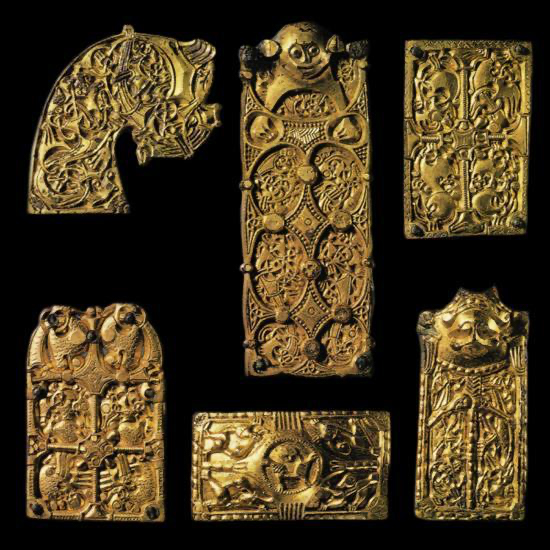
Set of gilt bronze fittings from the site of Broa, Gotland, Sweden, 8th c. 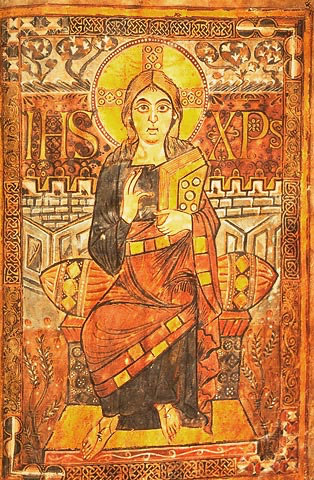
Christ on the Throne, miniature from the Godescalco Gospels, Germany 8th c. 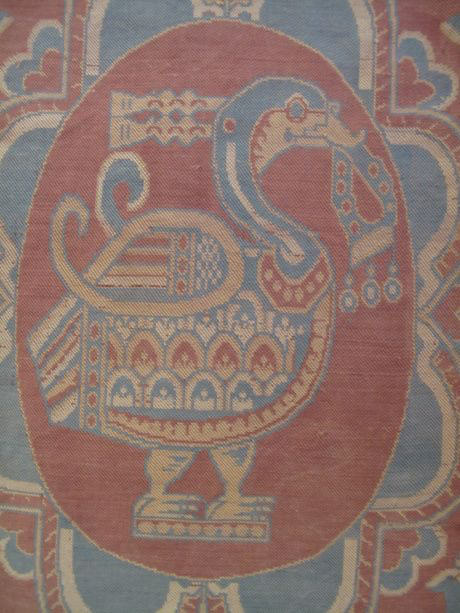
Silk textile fragment, Central Asia,
7th-9th c.
 Scribes & Storytellers